
content

What do I need to know about cataracts?

The human eye is similar to a camera, capturing light to form an image that is then ‘seen’ by the brain. Just like in a camera, there is a lens inside the eye that serves to focus light from the outside world. When we are born, this lens is crystal clear, and light can get through easily, forming a sharp, clear image. However, as we age, the lens naturally begins to cloud and become milky. This milky lens is called a cataract.

Sunlight, diabetes, smoking, and certain drugs can speed up this process, as can injury or eye surgery. Light can’t pass through a milky lens easily, and the world looks blurry and dim as a result. Many people also find glare to be a problem, especially when driving at night, or that colours aren’t as bright and vivid as they used to be. There are no medicines or drops that can treat cataracts, but they can be corrected with a short surgery that removes the cloudy lens and replaces it with a clear artificial one, restoring vision. Untreated, cataracts will steadily progress, making vision worse and worse. Cataracts are incredibly common (everybody will get them eventually), and more cataract surgeries are done in Canada each year than any other kind of operation.

What do I need to know about cataract surgery?

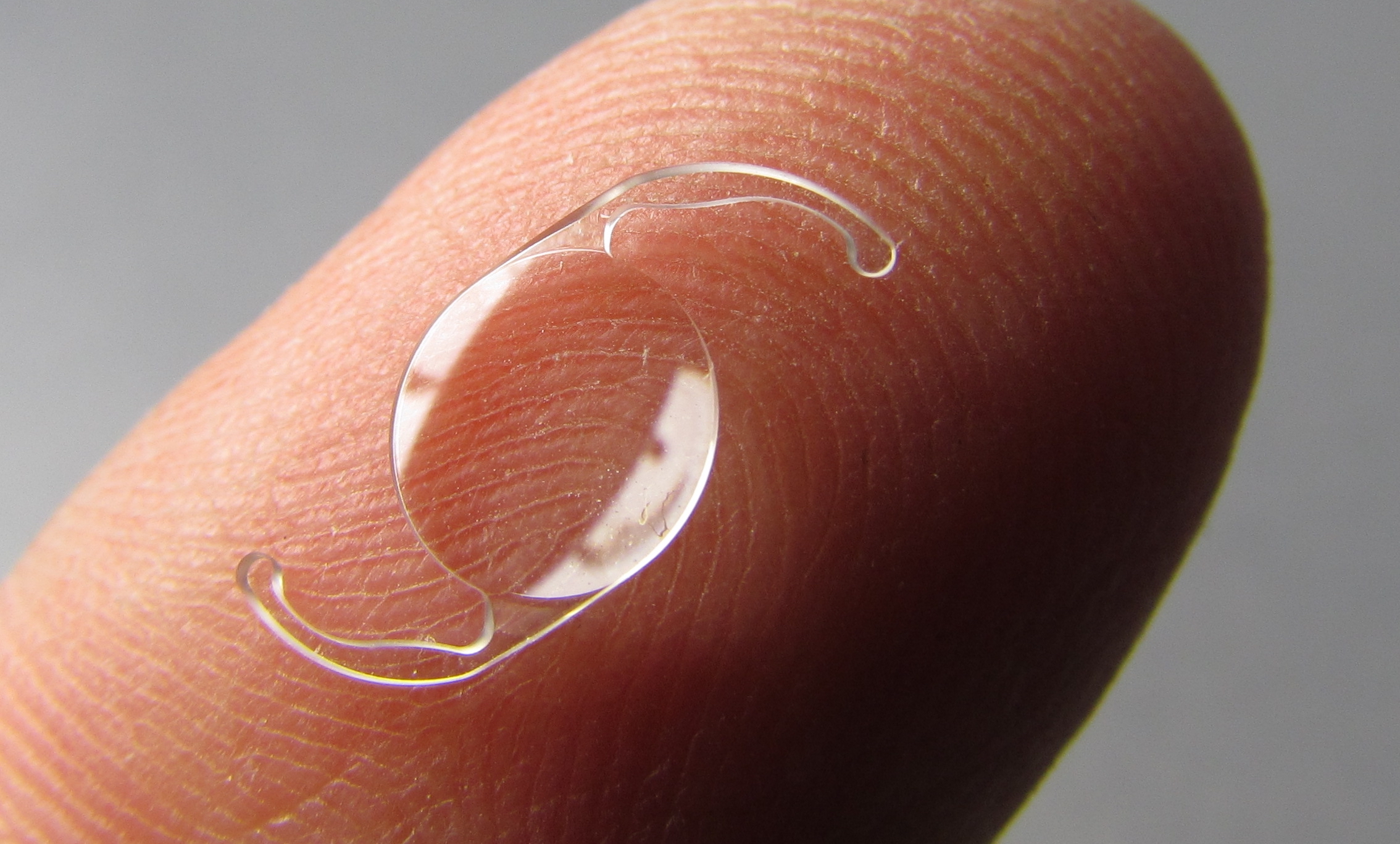
Cataract surgery removes the milky lens that is blocking light from entering the eye and replaces it with an artificial (plastic) lens that will never get cloudy or milky. Your surgeon may refer to this artificial lens as an ‘intraocular lens’, or IOL. Your ophthalmologist will recommend surgery when the cataracts are severe enough that they impact your quality of life. Cataract surgery generally takes less than 20 minutes, and can usually be done without the need for general anesthesia (being put to sleep). Depending on where you live, surgery may happen in a hospital, or in a surgery centre.

1

STEP 1

Your eye will be numbed with freezing anesthetic (either drops or a needle) so you will not feel pain. You may be given a medicine by mouth or intravenous to help calm you for the procedure

2

STEP 2

In the operating room, your face will be cleaned with a sterilizing solution and you will be covered with a clean drape (like a blanket) that covers your face. It is dark beneath the drape, but it will still be easy for you to breathe.

3

STEP 3

Your surgeon will place a small device to hold the eyelids open and will make tiny incisions into the clear part of the eye with a miniature blade or a laser.

4

STEP 4

Your surgeon will remove the cataract using an ultrasonic probe and place a new artificial lens selected to fit your eye in its place.

5

STEP 5

Once the new lens is in place, your surgeon will inject antibiotics and reseal the eye. The incisions your surgeon makes are usually so small that no stitches or sutures are required, speeding up recovery time.

FINISH

A shield is placed over the eye to protect it as it heals, and the surgery is complete.

step

What is an intraocular lens?

content

One of the most important decisions in cataract surgery concerns the lens to be put in the eye. Regardless of which class of lens you choose, your doctor will need to take many detailed measurements to ensure the lens chosen is a good fit for your eye (lenses come in ‘powers’, just like shoes come in sizes). This is not a choice you have to make: your doctor will calculate it for you based on the shape and size of your eye. There are 3 major lens types that you can choose from: Monofocal lenses, Toric lenses, and Multifocal lenses.

Monofocal lens

The Monofocal lens is the standard lens. It provides vision that is sharpest at one distance (for example, near for reading a book OR far away for driving). The vast majority of people choose to have the clearest vision for things that are far away and rely on reading glasses for near vision after surgery. Some people will find that they do not need glasses to see things far away after surgery, whereas other people (especially those with an eye condition called astigmatism) will still require mild glasses for seeing things that are far away most sharply. Everyone with a distance monofocal lens will still need reading glasses or bifocals after surgery to see things up close (e.g. for reading a book). Your ophthalmologist can help you choose the monofocal lens that may work best for you.

Toric lens

Some people have an eye that is shaped more like a football than a sphere. This is called ‘astigmatism’, and impacts how the eye focuses light. The Toric lens is a monofocal lens that corrects astigmatism, reducing the need for these people to wear glasses to see things that are far away. Just like the standard monofocal lens, reading glasses or bifocals will still be needed after surgery to see things up close. The cost of Toric lenses may be partially covered by some private insurance plans, but is not typically covered by provincial health insurance in Canada.

Multifocal lens

Multifocal lenses (including Trifocal and Extended Depth of Focus lenses) are made for people who want to avoid wearing glasses as much as possible. They can provide vision that is sharp at multiple distances (for example, near for reading a book AND far away for driving), reducing the need for glasses in many patients. There are many different types of multifocal lenses, which each have their benefits and limitations. Some limitations may include glare or halos around bright lights at night, or difficulty seeing in dim lighting. Your ophthalmologist can help you choose a multifocal lens that may work best for you. The cost of Multifocal lenses may be partially covered by some private insurance plans, but is not typically covered by provincial health insurance in Canada.

What should I expect before and after surgery?

Before surgery, your doctor may prescribe certain drops to prepare your eyes for the operation. Your surgeon may also recommend you clean your eyelids and eyelashes regularly in the weeks prior to surgery to reduce the risk of infection. It is very important you follow all the directions provided by your surgeon exactly. On the day of surgery, you will be asked to make sure you don’t eat or drink anything after a certain time (which your surgical team will communicate to you). Again, it is very important to follow these requirements exactly or your surgery might have to be postponed. When you arrive to the surgical suite, you will be introduced to a team of nurses and an intravenous catheter will be placed in your hand or arm prior to entering the operating room.

content

Following the surgery, you will have a shield over the eye, which should remain on at all times until you see your surgeon the next day (you may remove the shield temporarily to put drops in the eye, but it should be put back on immediately after). Your surgeon will prescribe drops (including antibiotics and anti-inflammatories) for several weeks to help the eye heal quickly after surgery. These should be used exactly as indicated by your doctor. It is normal for the eye to be fuzzy or blurry for several days to weeks after the surgery as the swelling and inflammation from the procedure resolve. However, there should be gradual improvement: a sudden decrease in your vision, new intense eye pain/redness that does not improve with the prescribed drops, or large amounts of discharge that is purulent/pus-like (white) are all abnormal. If these occur, call your surgeon or go to the emergency room if you cannot reach them.

Things to do

Before surgery

Arrange for someone to bring you to the hospital or surgical centre and back home the day of the surgery. You will not be able to drive yourself.

Use the eye drops prescribed by your doctor as instructed. Always wash your hands before putting in eye drops.

Make sure you know when to stop eating/drinking before surgery and if there are any medications your surgeon wants you to stop.

After surgery

Wear the eye shield that will be given to you at all times until you see the surgeon the next day. After that, wear the shield when sleeping for at least one week or as long as your doctor recommends. You may need to buy a roll of medical tape from the pharmacy to keep the shield in place. If the shield becomes dirty, you can clean it with soap and water. Make sure you dry the shield thoroughly before wearing it again.

You can usually bathe or shower as usual 24 hours after surgery. Make sure to ask your surgeon about this. Be careful not to get any water, shampoo, soap, or other products into your eyes when washing.

If you want to wash your face, use a clean cloth or tissue and normal tap water to clean gently around your eye. Do not rub or press on your eye or eyelids. Do not get water or soap into your eye.

Things often appear very bright after surgery. Wear sunglasses when outside for comfort and to protect the eyes.

Wait at least a month before getting a new prescription for reading or bifocal eyeglasses from your optometrist. Over the counter reading glasses from the pharmacy or other store may be helpful whilst you wait to get a new eyeglass prescription (the pair labelled +2.00 are a good place to start).

Patients sometimes have a hard time judging distances in the days following surgery. Be careful when taking the stairs and undertaking other activities that require depth perception. Ask for help when needed.

Things to avoid

After surgery

Do not rub your eyes, even if they are itchy or scratchy.

Do not bend over or undertake any strenuous exercise or work/activity for at least 2 weeks or until your doctor says it is safe to do so.

Do not let water, shampoo, soap, and other products get into your eyes.

Do not wear eye makeup for at least 2 weeks.

Do not lift heavy objects (~5kg or more) and avoid straining when having a bowel movement for at least 2 weeks.

Do not sleep without the eye shield for at least 2 weeks.

Avoid dusting, gardening, and other activities that may get debris in your eyes for at least 2 weeks. As always, wear sunglasses and safety glasses when appropriate.

Avoid swimming, hot tubs, and saunas for at least 4 weeks.

Note: The information provided above in the "Things to do" and "Things to avoid" sections are general guidelines. Please make sure to discuss and follow all directions provided by your ophthalmologist.

Common Questions

  • Who will perform the surgery?

    Cataract surgeries are performed by eye surgeons (ophthalmologists). Ophthalmologists are medical doctors (MD) with additional specialty training in medical and surgical treatment of eye diseases. You can ask your family doctor or optometrist to refer you to an ophthalmologist.

  • What types of eye drops will I need?

    Your surgeon will let you know exactly what eye drops you will need to take. Certain drops may be needed before surgery, and others after surgery. Some of the eye drops used may include antibiotics (to prevent infection), steroids (to decrease pain and inflammation), and preservative-free artificial tears (to help moisturise the eye and decrease irritation).

  • If I am currently using other eye drops, should I stop them before surgery?

    Please notify your surgeon of any eye drops or other medications you are currently using. They will inform you whether to continue or stop them for surgery.

  • How do I use eye drops?

    1. Always wash your hands before putting in any eye drops.
    2. If you are wearing contact lenses (before surgery), you should remove them prior to putting in eye drops.
    3. Remove the cap of the bottle and place it on a clean surface. Do not touch the tip of the bottle under the cap.
    4. Tilt your head back and look far back towards the ceiling. You can sit or lie down if that makes it easier for you.
    5. Gently pull down on your lower eyelid with one or two fingers. This should form a small pocket at the bottom of your eye.
    6. Keep both eyes open. Gently squeeze 1 drop into the eye pocket at the bottom of your eye. Be careful not to touch your eye with the bottle.
    7. Close your eyes for 30-60 seconds after each drop to let the drops absorb. If you have been prescribed multiple eye drops. Wait 5-10 minutes before putting in the next drop.
    8. Do not rub your eyes! If any drops leak out of your eyes, you can use a tissue to gently absorb the excess drops, but do not rub your eyes.

  • Will I need new glasses after surgery?

    This will depend on the type of intraocular lens you chose. If you select a standard distance monofocal intraocular lens, you will need to get new reading or bifocal glasses after surgery. You may also require new glasses for far away vision if you have astigmatism and opt for a monofocal intraocular lens. A Toric intraocular lens will correct your astigmatism, but you will still need new reading glasses after surgery. Multifocal intraocular lenses will typically reduce your need for glasses after surgery, but you may still require glasses for optimal vision in some cases depending on the type of lens and factors specific to your needs. You may want to discuss this with your ophthalmologist, so that they can help you select the intraocular lens that works best for you. In any case, you may want to wait at least one month after surgery before getting a new eyeglass prescription from your optometrist as your vision will take some time to stabilise after cataract surgery. Temporary over the counter reading glasses from the pharmacy or other store may be helpful in the interim before you get a new eyeglass prescription.

  • If I have cataracts in both eyes, will the surgery be done in both eyes at the same time?

    Cataract surgery is usually done sequentially (one eye at a time) to give time for the vision to stabilise before proceeding to the second eye. Patients with cataracts in both eyes will usually have cataract surgery in the second eye 2-4 weeks after the first.

  • How long will it take to recover after surgery?

    Most people see better within 1-3 days after surgery, but it can take up to 3-10 weeks for your vision to stabilise completely.

  • Will the cataracts ever come back?

    No. Once the cataract is removed and replaced with an intraocular lens, you will never get another cataract in that same eye. However, 20-50% of patients will experience what is known as posterior capsule opacification (PCO) within 2-5 years after cataract surgery. PCO is caused by the buildup of residual cells from your original lens behind the clear plastic lens. These cells can cloud your vision over time, resulting in symptoms much like the original cataract. A quick and painless laser procedure called a YAG laser capsulotomy can be performed by your ophthalmologist to make your vision clear again. In this procedure, a laser is used to make a small opening in the posterior capsule and remove the PCO obstructing your vision. This is not a surgery, and takes 2-5 minutes in the clinic to complete. You are awake for the procedure.

Disclaimer

The information provided on aboutcataracts.ca and in the aboutcataracts.ca handouts is for educational purposes only and should not be considered medical advice. The information provided here is not intended to replace the counsel of your ophthalmologist or other health care professionals. Please contact a health care professional if you need medical advice. The authors, contributors, reviewers, editors, and sponsors of aboutcataracts.ca are not responsible for errors or omissions or for any consequences from application of the information in this website/handout and make no warranty, expressed or implied, with respect to the currency, completeness, or accuracy of the contents of the aboutcataracts.ca website/handout. There are websites and resources linked or embedded within this website/handout that are operated or created by or for organisations, companies, or individuals not affiliated with aboutcataracts.ca. These links are provided as a convenience and for informational purposes only; they do not constitute an endorsement or an approval by the authors, contributors, reviewers, editors, and sponsors of aboutcataracts.ca. The authors, contributors, reviewers, editors, and sponsors of aboutcataracts.ca bear no responsibility for the accuracy, security, legality, or content of the external sites linked in the aboutcataracts.ca website/handout or for that of subsequent links.

content

AboutCataracts.ca was created by the Section of Ophthalmology at the University of Calgary.

This project is supported by an Emerging Leaders in Health Promotion grant funded by the Alberta Medical Association and MD Financial Management/Scotiabank Healthcare+.